
G808G: The Badge That Talks, Lasts a Month, and Is Certified for Hazardous Zones
4G Cat.1 · Explosion-Proof · Voice Alerts · 2000mAh
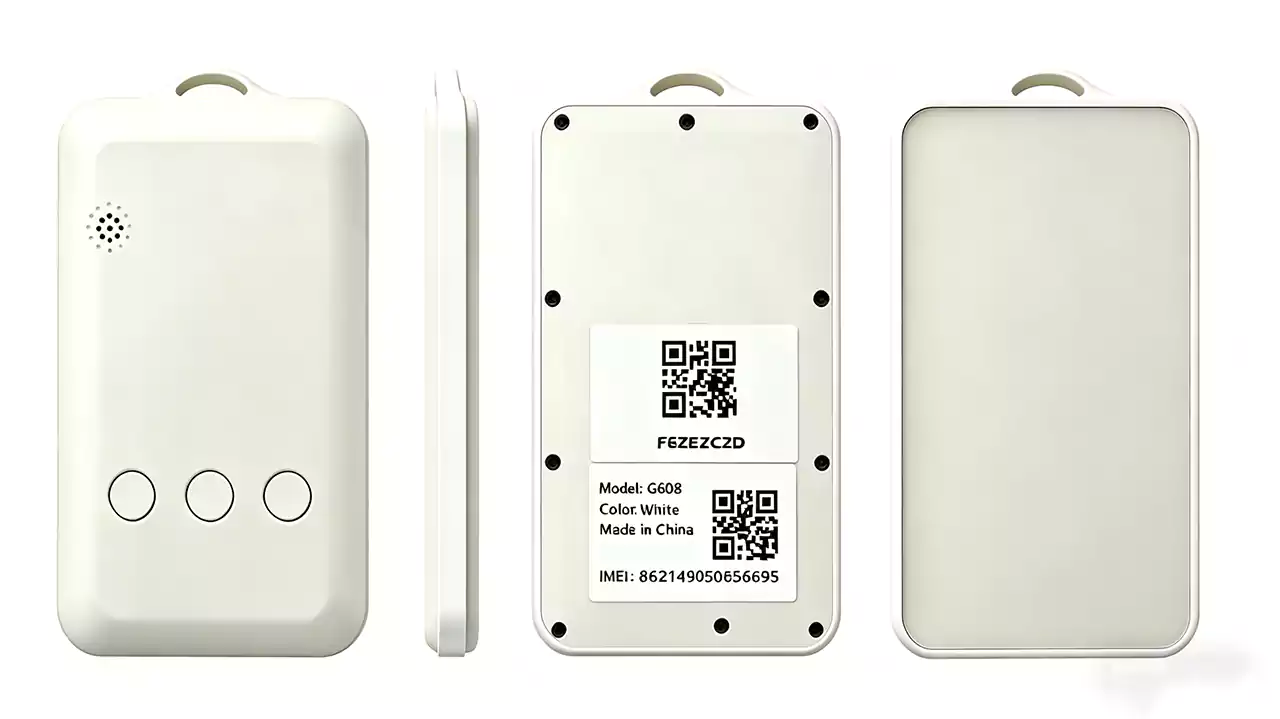
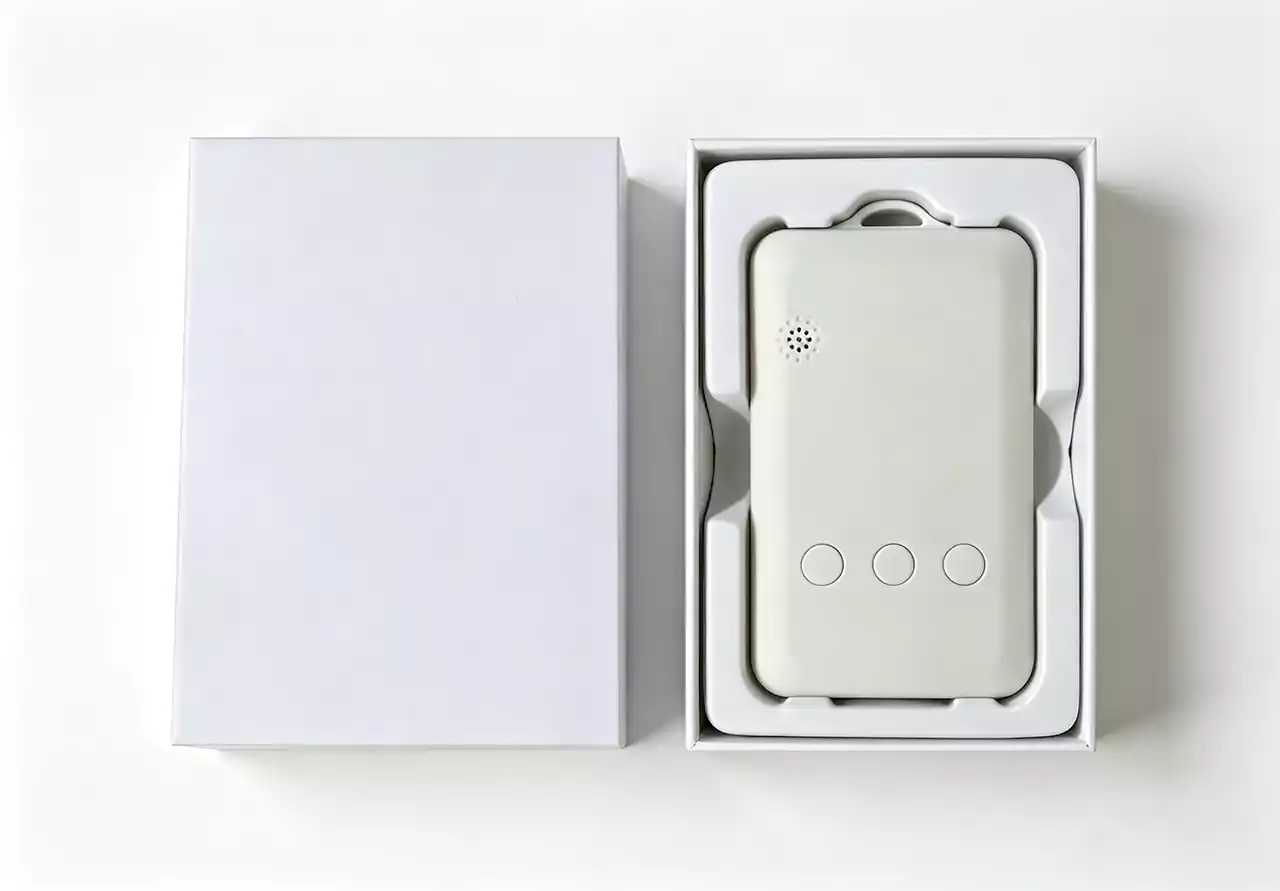
Not a wristband. Not a watch. This is infrastructure for workforce management.
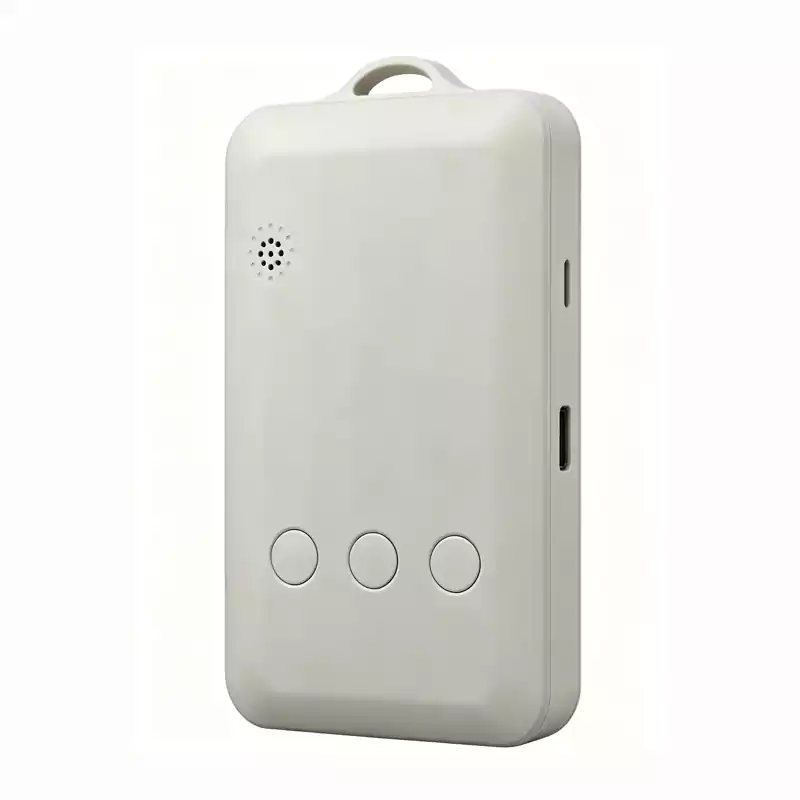
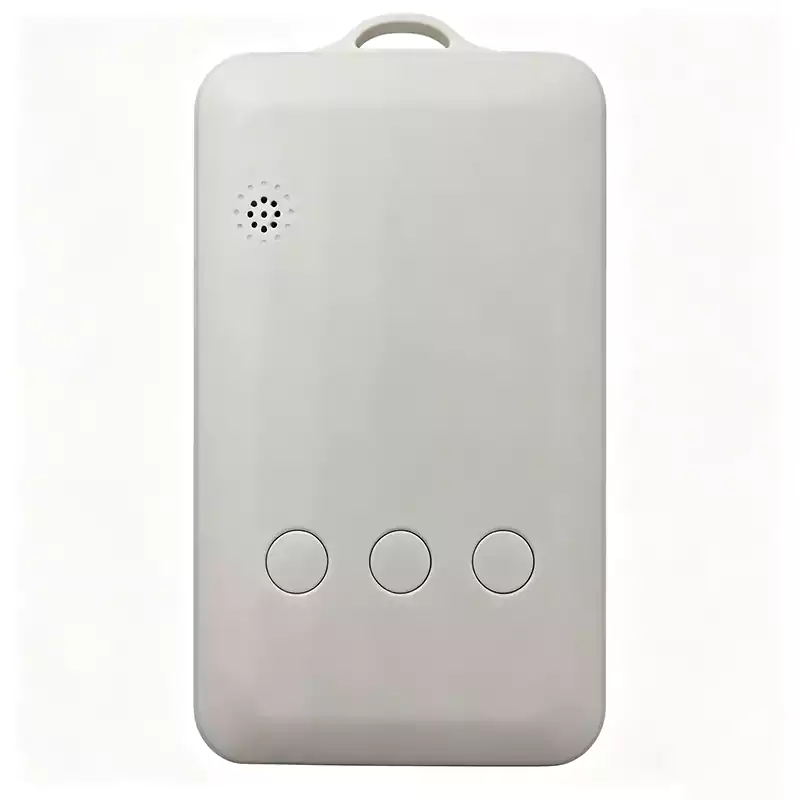
The G808G is worn on a lanyard or clipped to clothing. It is visible. It is identifiable. And unlike a wrist-worn device, it can be collected, charged, and reissued across shifts without touching anyone's body. That operational detail — the ability to pool and rotate devices — is what makes the G808G the default choice for large industrial sites, chemical plants, and mining operations.
The G808G is the most architecturally complex device in the entire product line. It spans six radio variants, two completely different UWB architectures, an optional dual-band GNSS module, a built-in speaker with voice prompts, and an optional RFID module for door access and canteen payment. This page covers the full family.
The badge form factor solves problems watches and wristbands create
Problem 1: Personal devices get lost, damaged, or arrive with dead batteries. Workers take wristbands home. They forget to charge them. They lose them. The G808G is designed for pooled use. Workers collect a fully charged badge at the start of shift and return it at the end. The 40-slot face-recognition charging station handles assignment, charging, and access control automatically — no manual pairing, no clipboards, no shift supervisor chasing dead devices.
Problem 2: Some environments are explosive. The G808G carries Ex ib IIC T4 Gb certification — intrinsic safety for gas environments (Zone 1, Zone 2). This is not a marketing claim. It is a certified hardware design with a 2000mAh intrinsically safe battery and an explosion-proof housing. For chemical plants, refineries, and underground mines, this certification is non-negotiable.
Problem 3: Workers need to hear alerts, not just feel them. In noisy industrial environments — near compressors, conveyors, heavy machinery — a vibration motor is useless. The G808G includes a built-in speaker and audio amplifier capable of voice prompts and TTS (text-to-speech) announcements. A geofence breach doesn't just trigger a vibration you might miss. The badge says where to go, or what to avoid, in plain language.
The complete G808 series: eight variants, three UWB architectures
| Model | Network | UWB | GNSS | WiFi | Speaker | RFID | Best For |
|---|---|---|---|---|---|---|---|
| G808G | 4G Cat.1 | ✗ | GPS/BDS | ✓ | ✓ | Optional | Standard hazardous-area personnel tracking |
| G808GU-D | 4G + UWB | DW1000+PA/FEM | GPS/BDS | ✓ | ✓ | Optional | Long-range UWB AoA: tunnels, mines, corridors (400m with 1D base station) |
| G808U | UWB only | DW1000+PA/FEM | ✗ | ✗ | ✗ | Optional | UWB-only tag for AoA base station networks |
| G808GU-M | 4G + UWB | MK8000 (CH5) | ✗ | ✗ | ✗ | Optional | UWB beacon-mode positioning + proximity alarm with G908GU |
| G808L | LoRaWAN | ✗ | GPS/BDS | ✗ | ✗ | Optional | Private LoRa network, no cellular cost |
| G808LU | LoRa + UWB | MK8000 | ✗ | ✗ | ✗ | Optional | Hybrid LoRa + UWB on private infrastructure |
| G808GC | 4G Cat.1 | ✗ | GPS/BDS | ✓ | ✓ | Optional | Asset tag variant (tamper-resistant) |
| G808D | NB-IoT | ✗ | Dual-band L1/L5 BDS | ✓ | ✓ | Optional | High-precision GNSS with voice, NB-IoT network |
Two UWB architectures explained
The G808 series offers two completely different UWB implementations. They are not interchangeable. Choose based on your site topology.
Architecture A: G808GU-M (MK8000 single-chip CH5)
UWB beacon mode — no base station required
UBeacon positioning: UB01 beacons broadcast; badges scan
Proximity ranging: badge-to-G908GU distance measurement (<0.5m)
Best for: open indoor spaces, warehouses, zones where installing base stations is impractical
Limitation: beacon-mode positioning provides zone-level accuracy, not continuous XY tracking
Architecture B: G808GU-D (DW1000 + PA/FEM, CH2)
UWB AoA single base station mode
One U1000-C2 AoA base station covers up to 2000m², tracking ≥200 tags simultaneously
One U1000-C1 1D base station covers up to 400m linear range (tunnels, corridors, pipe galleries)
Continuous XY positioning with sub-30cm static accuracy
Best for: tunnels, mines, long corridors, agricultural greenhouses, areas requiring continuous path tracking
Limitation: requires base station installation and power infrastructure
The DW1000+PA/FEM architecture includes a power amplifier and front-end module, extending the effective range significantly beyond standard UWB implementations. A badge with PA can reach 100m+ to a base station.
Dual-band GNSS: L1/L5 for high-precision outdoor positioning
The G808D (NB-IoT variant) reserves a dual-band L1/L5 GNSS module built on 22nm process technology. This enables sub-meter outdoor positioning with high interference rejection — useful in environments where multipath from metal structures degrades standard GPS. This is a reserved design, available on custom order. Standard G808G models use single-band GPS/BDS.
Charging at scale: the 40-slot face-recognition station
This is not an accessory. It is the operational core of a G808G deployment at scale.
Workflow:
First-time setup: Insert all badges into the 40-slot charging cabinet. The system maps each badge to its physical slot.
Worker collection: Worker approaches the station. Face recognition verifies identity. The system announces the assigned slot number by voice. The slot LED flashes. Worker retrieves the badge. At that moment, the worker's identity is automatically bound to that badge in the platform.
End of shift return: Worker holds the badge to the reader. The system announces the return slot. Badge is inserted. Identity is unbound. Charging begins automatically.
Door access integration: The station connects to the site's access control system. Badges are automatically authorized at collection and deauthorized at return.
Station specifications:
Cabinet: 1700 × 1130 × 300mm, 70kg
Screen: 10.1" capacitive touch, Android 11
Camera: 200W pixel binocular live-body detection
Login: face recognition, IC/ID card, QR code, pickup code
Slots: 40 transparent doors with electronic locks
Charging: USB ports compatible with any charging cable
Power: 38W idle, 350W full charging load, 100-240VAC input
Network: WiFi/Ethernet standard, 4G optional
Software: single-machine mode (no network required), API for integration
Protection: overload, overvoltage, overcurrent, high/low temperature, grounding, lightning protection
The station performs continuous self-diagnostics — monitoring each slot for power short circuits and reporting faults to the maintenance backend.
Positioning and reporting logic
The G808G uses a configurable positioning hierarchy:
Primary: BLE beacon scan (indoor, 1-3m with 6-8m beacon density; sub-meter with AoA gateway)
Secondary: GPS/BDS (outdoor, 5-20m)
Tertiary: WiFi fingerprinting (10-50m)
Fallback: Cellular LBS
An onboard accelerometer controls reporting behavior:
No movement for 20 minutes → no positioning, no reporting
Movement detected → immediate position fix and report, then periodic at configured interval
High-tolerance algorithm: if the current position is nearly identical to the previous position, the device suppresses the report to save power — no duplicate data on the platform
Voice alerts: what the badge can say
The built-in speaker and TTS engine enable:
Geofence breach: "You have entered a restricted area. Please exit immediately."
SOS confirmation: "SOS alert sent. Help is on the way."
Low battery: "Battery low. Please return to charging station."
Proximity warning: "Vehicle approaching. Maintain distance."
Shift start/end: "Shift starting. Please proceed to your assigned zone."
Voice prompts can be customized per deployment. The 4G models support OTA firmware updates, so voice content can be modified without physical device access.
Full technical specifications
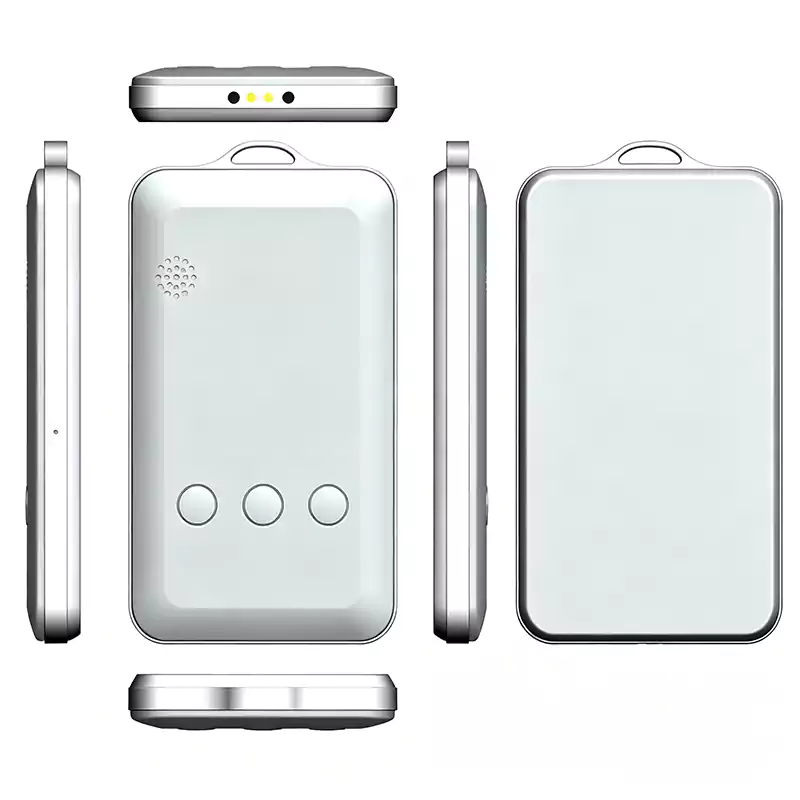
| Dimensions/Weight | Badge form factor, white PC+ABS body |
|---|---|
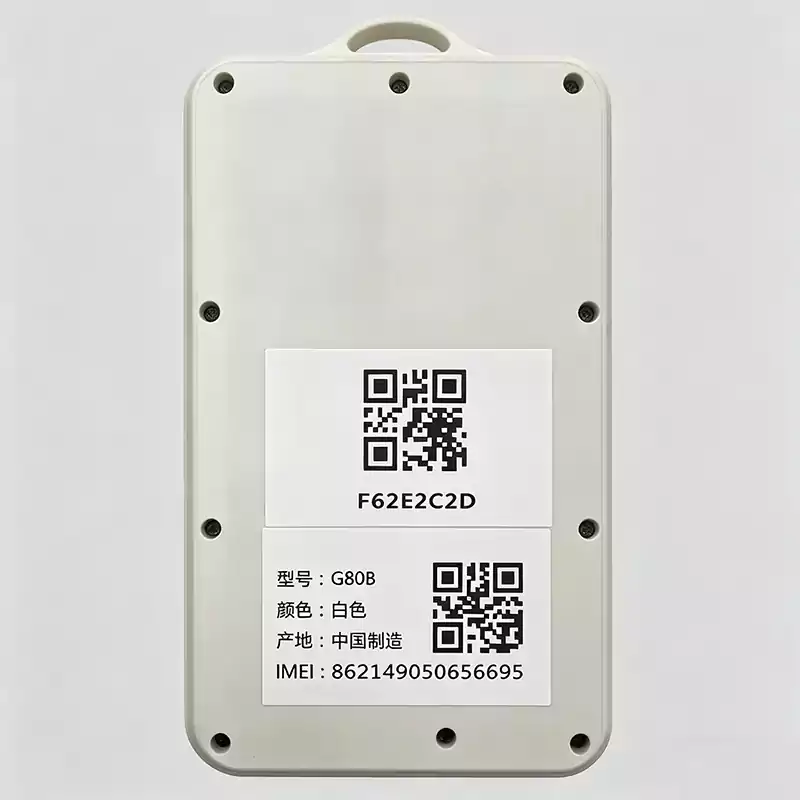
| Material | PC+ABS, white body, user-applied sticker label |
| Chipset | BLE 5.1 SoC, Cortex M4, 1MB Flash |
| Cellular (G models) | 4G Cat.1: FDD B1/B3/B5/B8; TDD B34/B38/B39/B40/B41 |
| SIM | Pre-installed Nano IoT SIM (3-year, China Mobile) |
| Positioning | GPS + BDS + WiFi + LBS + BLE (varies by model) |
| UWB (GU-D) | DW1000 + PA/FEM, CH2, AoA + 1D ranging |
| UWB (GU-M) | MK8000, CH5/CH9, beacon mode + proximity ranging |
| Dual-band GNSS (G808D) | 22nm L1/L5 BDS, sub-meter, reserved design |
| Speaker | Built-in audio amplifier, TTS voice prompts |
| Battery | 2000mAh Li-ion (intrinsically safe), magnetic charging, 3.5h charge |
| Battery life | Standby: 30+ days; Normal use: 10-15 days (10-min reporting) |
| Waterproof | IPX5 |
| Operating temp | -10°C to 60°C |
| User interface | 3 large buttons (status, SOS, power), red + blue LED, speaker |
| RFID (optional) | 13.56MHz (M1 or CPU card) for access control, payment |
| Offline buffering | Yes (1MB Flash store-and-forward) |
| Certifications | CE, Ex ib IIC T4 Gb explosion-proof |
| In the box | Badge ×1, magnetic charge cable ×1, certificate ×1, manual ×1, platform/app guide ×1, sticker labels ×2 |
| Optional | Bluetooth beacons, RFID tag, 5V/1A charger, 40-slot charging station |
What the G808G is NOT
It does not have health sensors. No heart rate, no SpO2, no temperature. This is a positioning and safety badge, not a health wearable.
It is not designed for concealment. The badge is visible and identifiable — this is intentional for access control and site management.
The G808GU-M and G808GU-D use completely different UWB architectures. They are not interchangeable on the same base station infrastructure. Choose one architecture before deploying.
Dual-band L1/L5 GNSS is only on the G808D NB-IoT variant. Standard G808G models use single-band GPS/BDS.
The 125kHz proximity sensor is reserved (default absent). It requires OV125 infrastructure for real-time attendance and hazard zone alarms.
Ready to deploy a badge for hazardous zones and large-scale workforce management?
Request a sample kit or a technical consultation. We'll help you select the right UWB architecture and charging station configuration for your site.
Request pricing & sample →Mobile: [+86] 189-7480-9810 (supports calls, WhatsApp, and WeChat)
Email: sales@cumond.com
Website: www.iot-solutionhub.com